
A row of tiles growing one square at a time can be a better introduction to algebra than a page of symbols. You can see the pattern first, describe it in words, and then use a variable to stand for the part that keeps changing. Math often becomes more approachable when the symbols arrive after the idea.
Notice What Changes
Algebra is useful for describing relationships, such as how the total cost changes when you add more items at the same price. Before solving for a letter, ask what the quantities represent and how they are connected. A quick table or sketch can make that relationship visible.
Give Shapes A Job
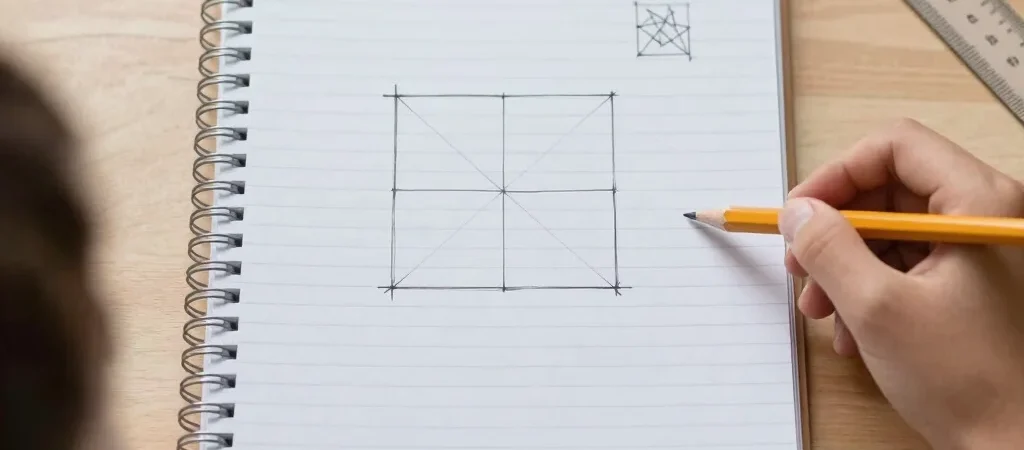
Geometry is not only about naming shapes; it helps explain space, measurement, and how parts fit together. A floor plan, a paper-folding exercise, or the angles in a bike frame can give a geometry topic a concrete home. Draw the situation before reaching for a formula, especially when the diagram is doing half the explaining.
Ask What Data Shows
Statistics and probability offer ways to think carefully about information and uncertainty. You might compare the range of temperatures across a week or ask how likely a particular outcome is in a simple game. Algebra, geometry, statistics, and probability each start with a different kind of pattern, so choose the question that feels easiest to picture.